Case Study
FloQast Reporting
Designed a 0-to-1 XBRL tagging product that transformed a 150-hour manual filing process into a streamlined workflow — securing a $300K deal with Ralph Lauren.
Case Study
Designed a 0-to-1 XBRL tagging product that transformed a 150-hour manual filing process into a streamlined workflow — securing a $300K deal with Ralph Lauren.
Every public company must file financial reports with the SEC using XBRL — a structured data standard that makes financial information machine-readable. The existing process was fragmented across multiple tools, entirely manual, and took weeks of coordination.
I led the end-to-end design of FloQast's XBRL tagging product from concept through production launch — conducting research, running design sprints, and ultimately discovering a novel approach that made the entire MVP viable.
XBRL (eXtensible Business Reporting Language) is an open international standard for digital business reporting, used around the world for the exchange of financial information. It’s mandated by the SEC for all public company filings since 2009 and adopted by regulators in over 50 countries.
XBRL transforms financial reporting from static documents into structured, machine-readable data — enabling faster, more accurate analysis across companies, industries, and borders.
Required by the SEC, ESMA, and regulators globally. Non-compliance can mean filing rejections and penalties.
Standardized tags make it possible to compare financials across companies, industries, and borders instantly.
Eliminates manual re-keying of data. Analysts and auditors can consume structured data directly from filings.
Before any XBRL tagging can begin, financial data must be collected from every team across the organization — each maintaining their own Excel workbooks, formats, and timelines. A typical 10-K consolidation cycle takes six weeks of coordination and firefighting.
Tools like Workiva require accountants to manually tag every field in a disclosure — mapping each value to an XBRL concept one at a time, using a patchwork of software.
Every value in a filing must be individually mapped to an XBRL taxonomy concept — thousands of tags per document.
Taxonomy updates mean prior-year mappings break. Teams start from scratch each filing cycle.
Accountants juggle Excel, Word, a tagging tool, and a validation tool just to complete a single disclosure.
At roughly 3 minutes per tag and 3,000+ tags per filing, manual tagging consumes weeks of a single person’s time.
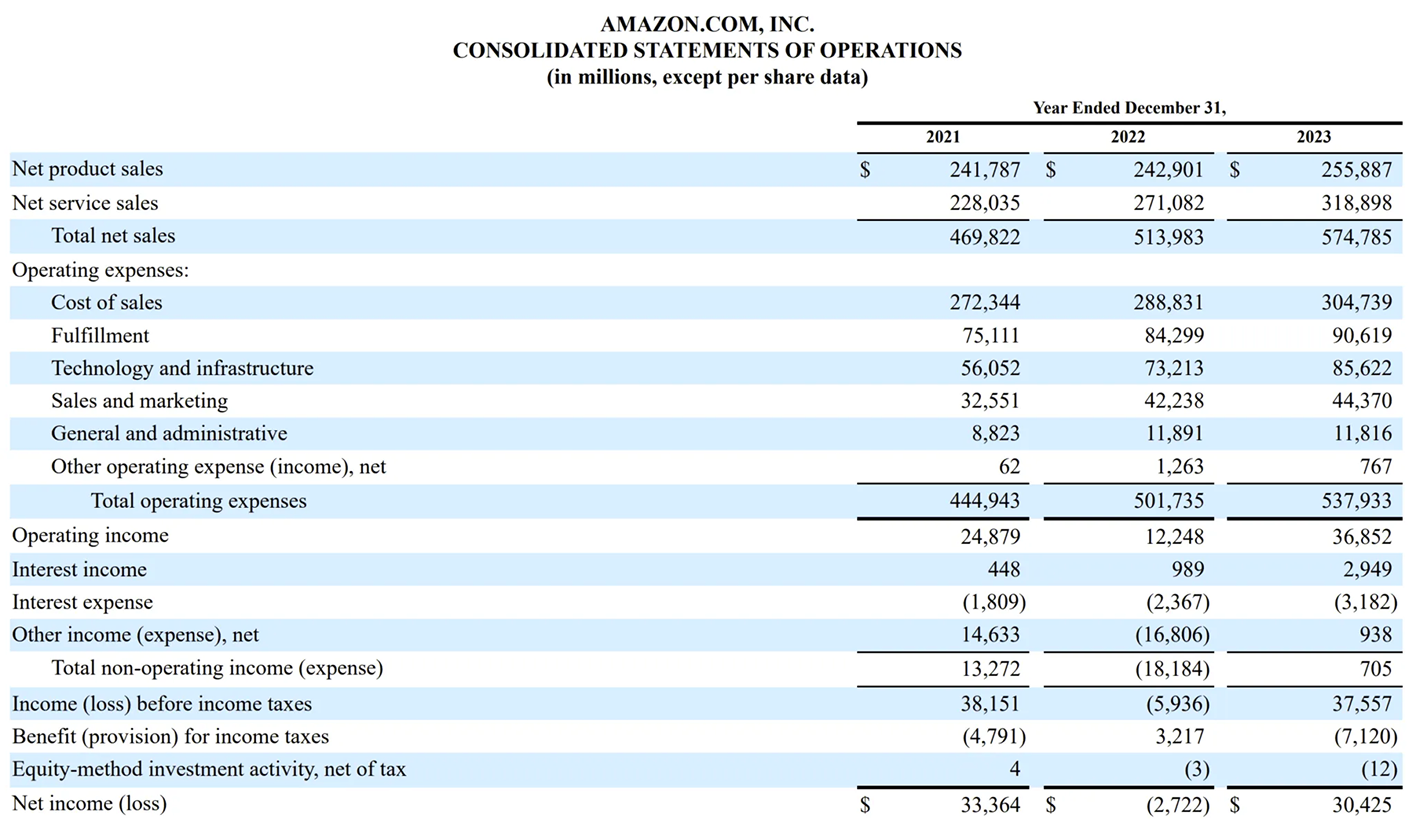
Amazon’s Consolidated Statement of Operations — every line item was assembled from data owned by different teams across the company
We identified a $2B+ compliance market with no native tagging solution in existing close platforms. From there, I led a focused design sprint with product, engineering, and domain experts to map user journeys and converge on a core solution.
 1.png)
Design sprint — the team plotted each solution on an impact/effort matrix to determine build priority
We mapped the core jobs accountants need to accomplish during the filing process — and designed solutions that directly address each one.
Auto-suggest tags based on prior filings, line-item labels, and taxonomy patterns — reducing manual lookups by 80%.
A unified dashboard showing tag status, reviewer comments, change history, and approval state across every review cycle.
Consolidate data import, tagging, validation, and submission into a single integrated platform within FloQast.
Inline validation checks that surface errors as you tag — not after you’ve completed the entire document.
The team had bandwidth for one focused build cycle. AI-powered features required ML infrastructure, training data pipelines, and model tuning that couldn’t be delivered in the timeline. We had to strip back to what was buildable and still valuable.
Low-fidelity mockups from the first design iteration — focused on validating the core user flow before investing in visual polish.
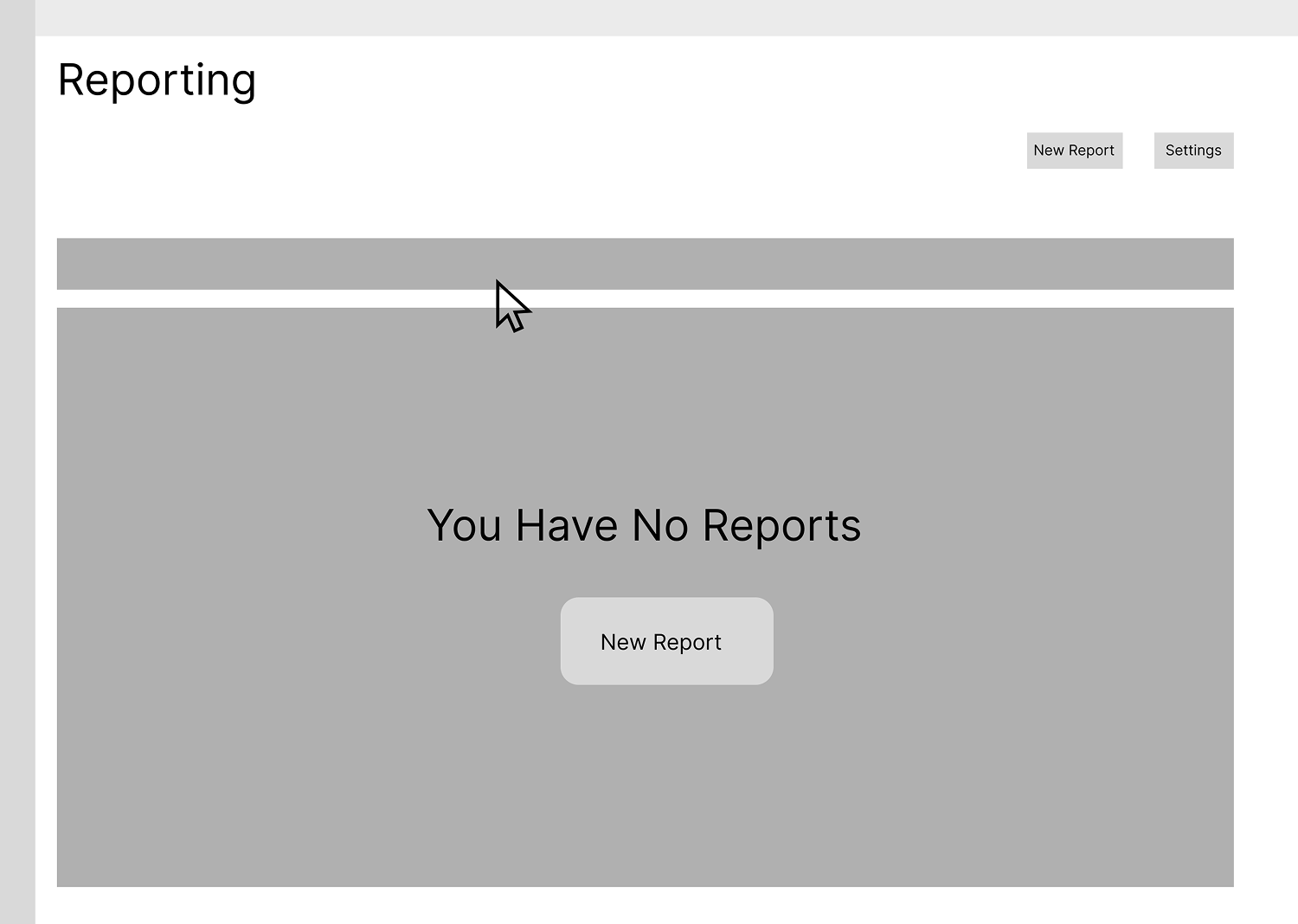
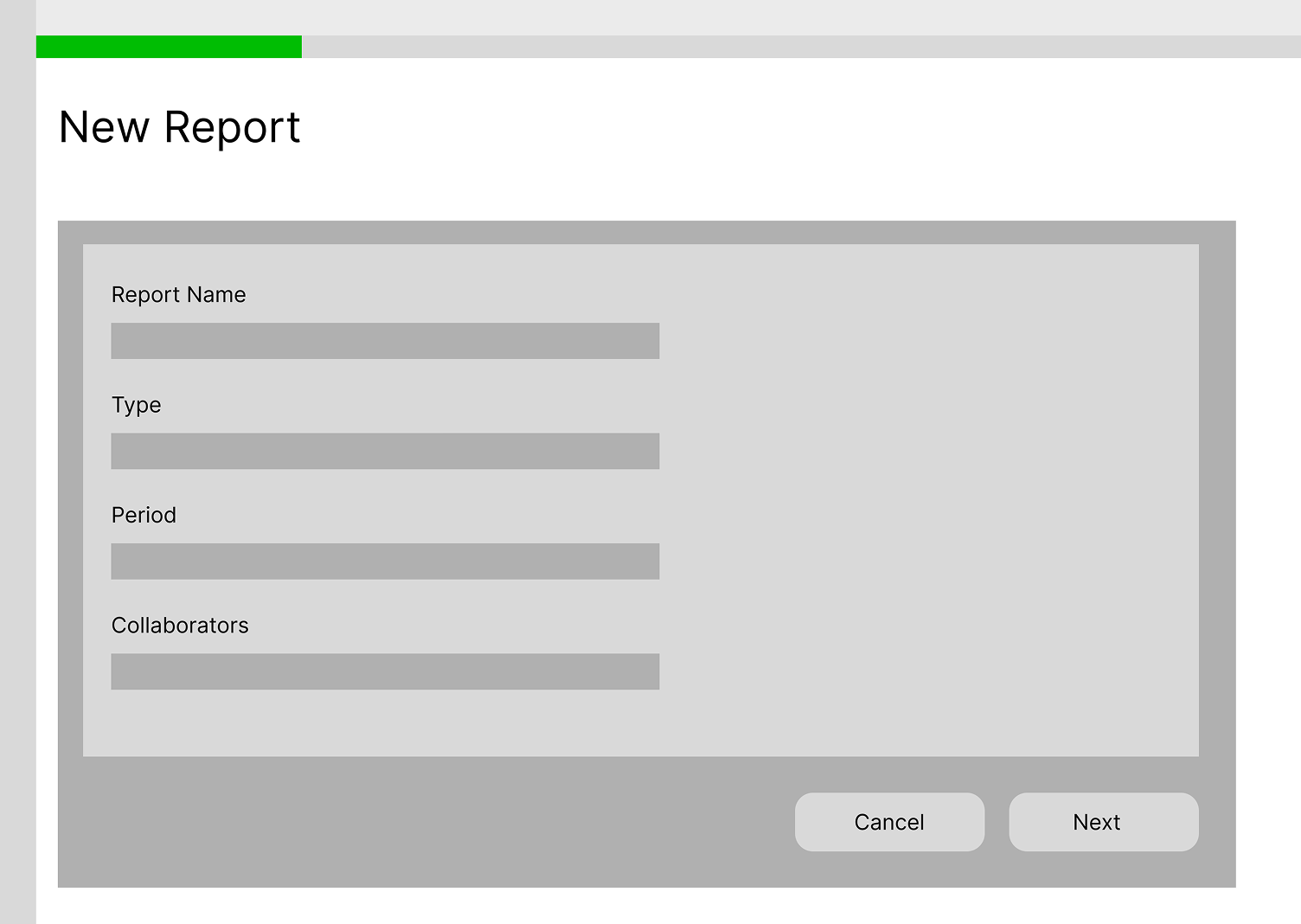
Left: Empty state when no reports exist — Right: Report creation wizard
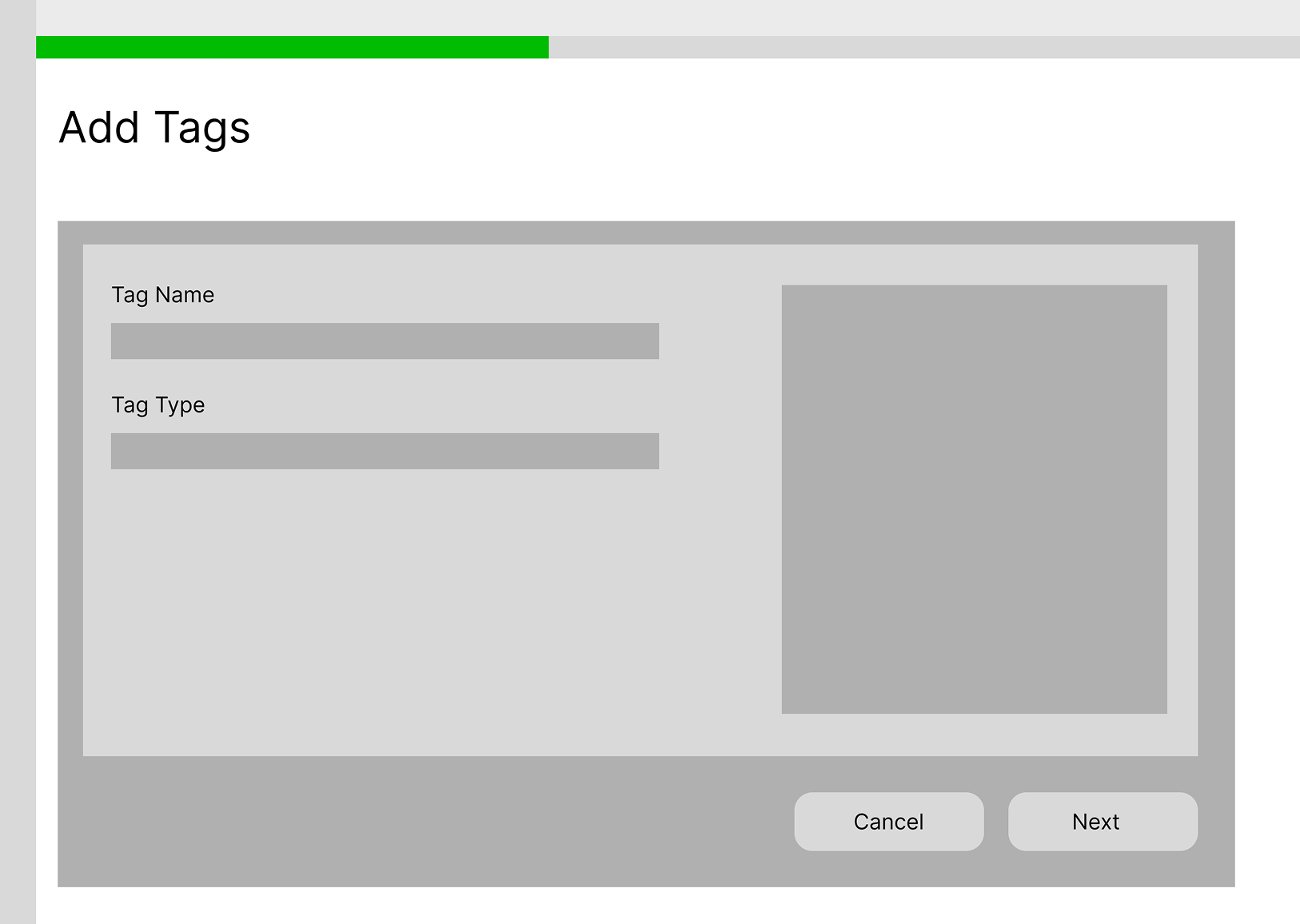
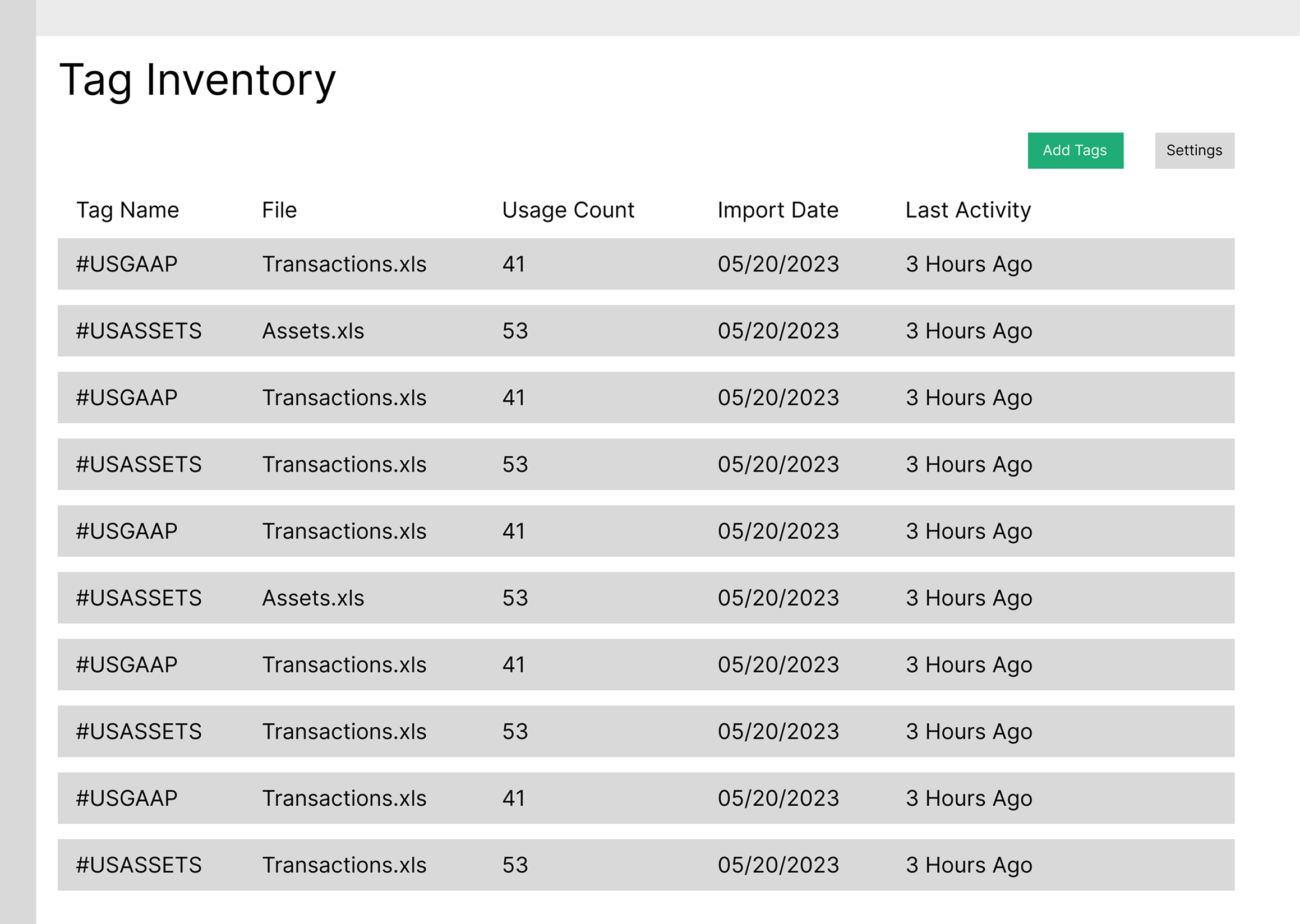
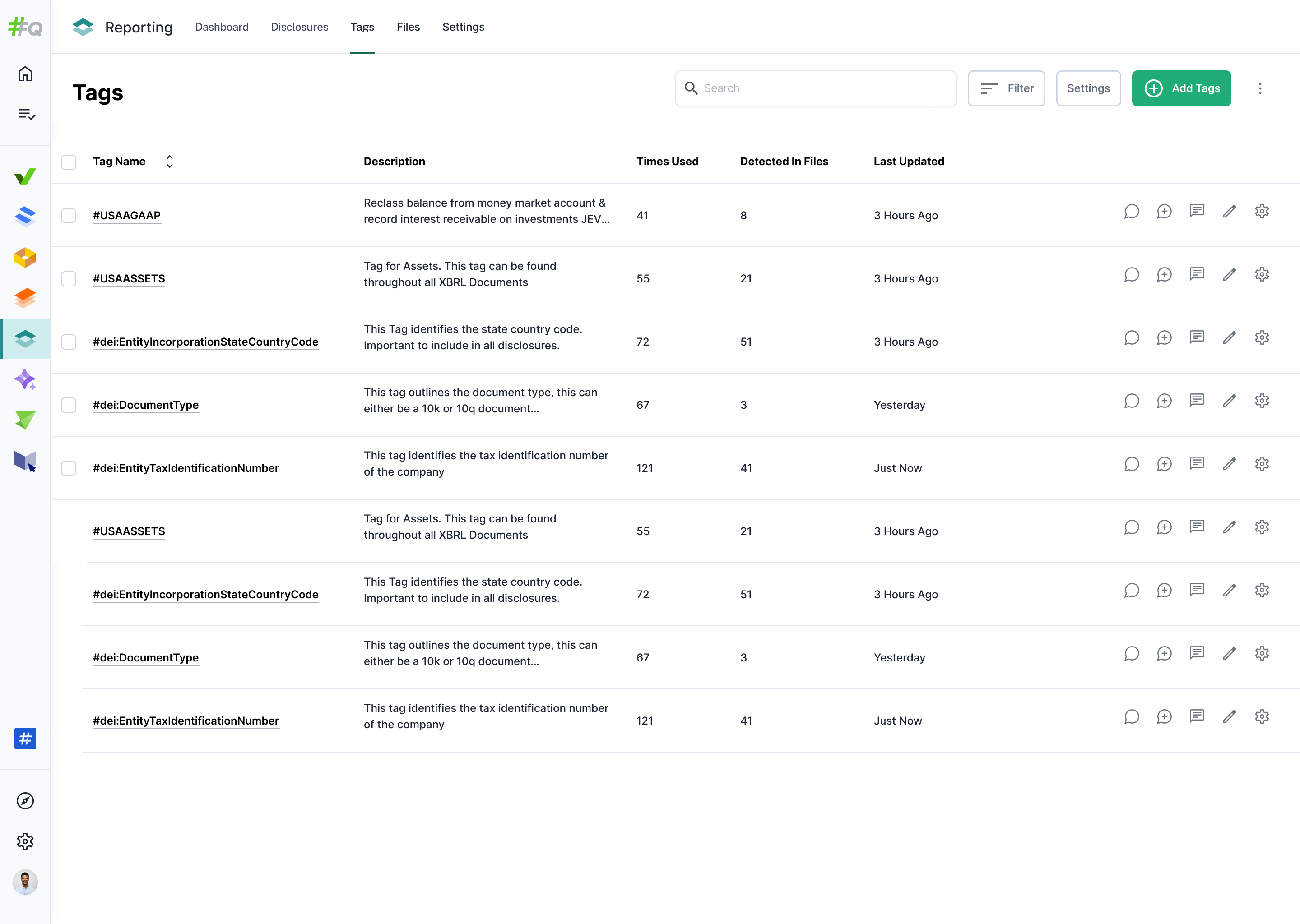
Left: Tag creation with preview panel — Right: Central tag inventory with usage tracking
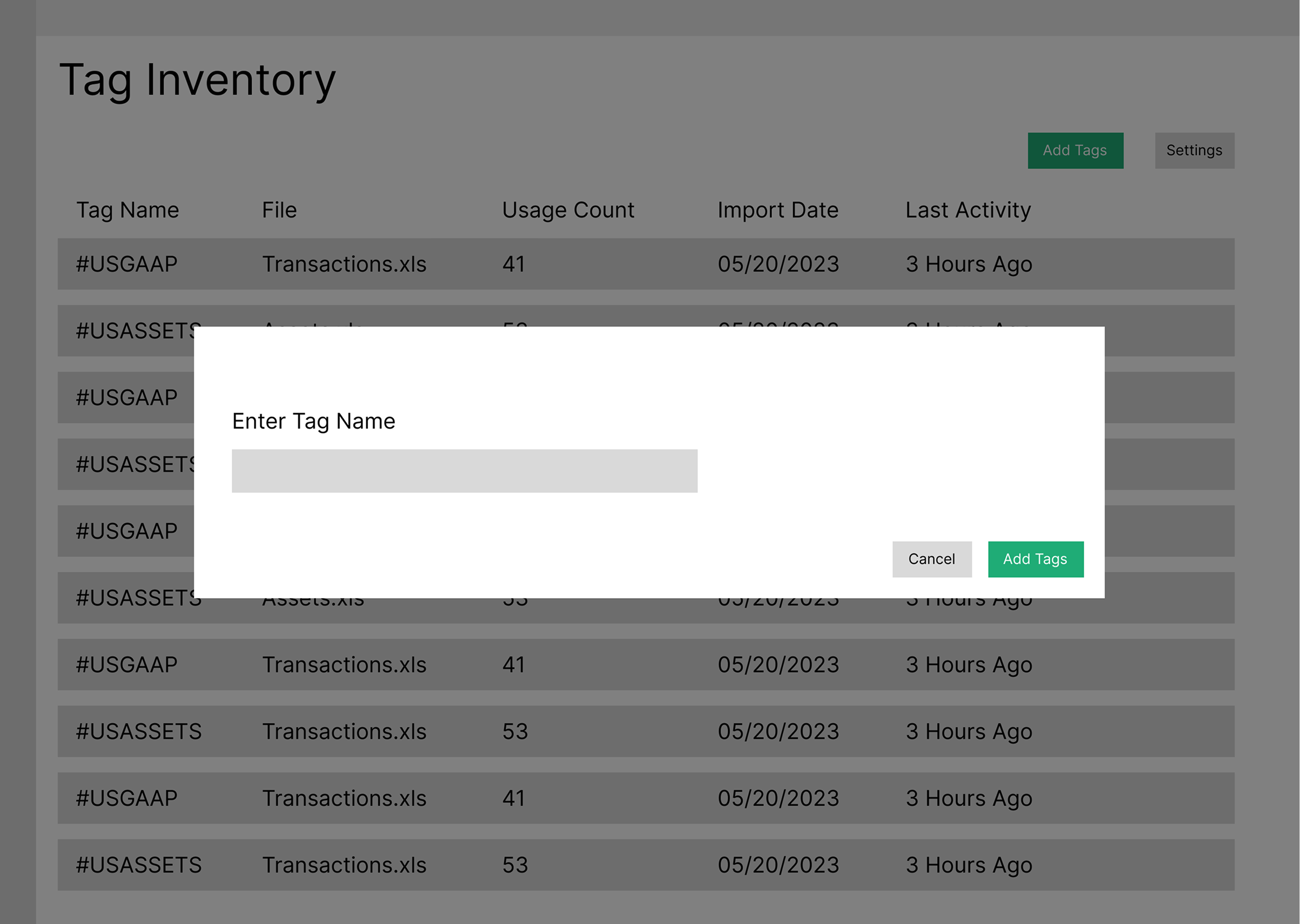
Inline modal for adding new tags directly from the inventory view
After pivoting to an MVP without AI automation, our system required users to manually add each XBRL tag one by one. With 3,000+ tags per filing, this approach would be unsustainably slow and defeat the purpose of the product.
This confirmed our pivot was right — the MVP needed to support bulk import and reuse of existing tags, not just manual one-by-one creation. Building for scale was non-negotiable.
The manual tagging process — each tag must be individually created, named, typed, and mapped
Instead of asking users to manually create thousands of tags, I investigated the SEC EDGAR database and discovered that every public company’s previous XBRL filings — including all tags — are freely accessible and embedded directly in the HTML source.
I then worked with engineering to validate that extraction was technically feasible before presenting the idea back to the product manager, who brought it to leadership. With their buy-in, we modified the MVP requirements.
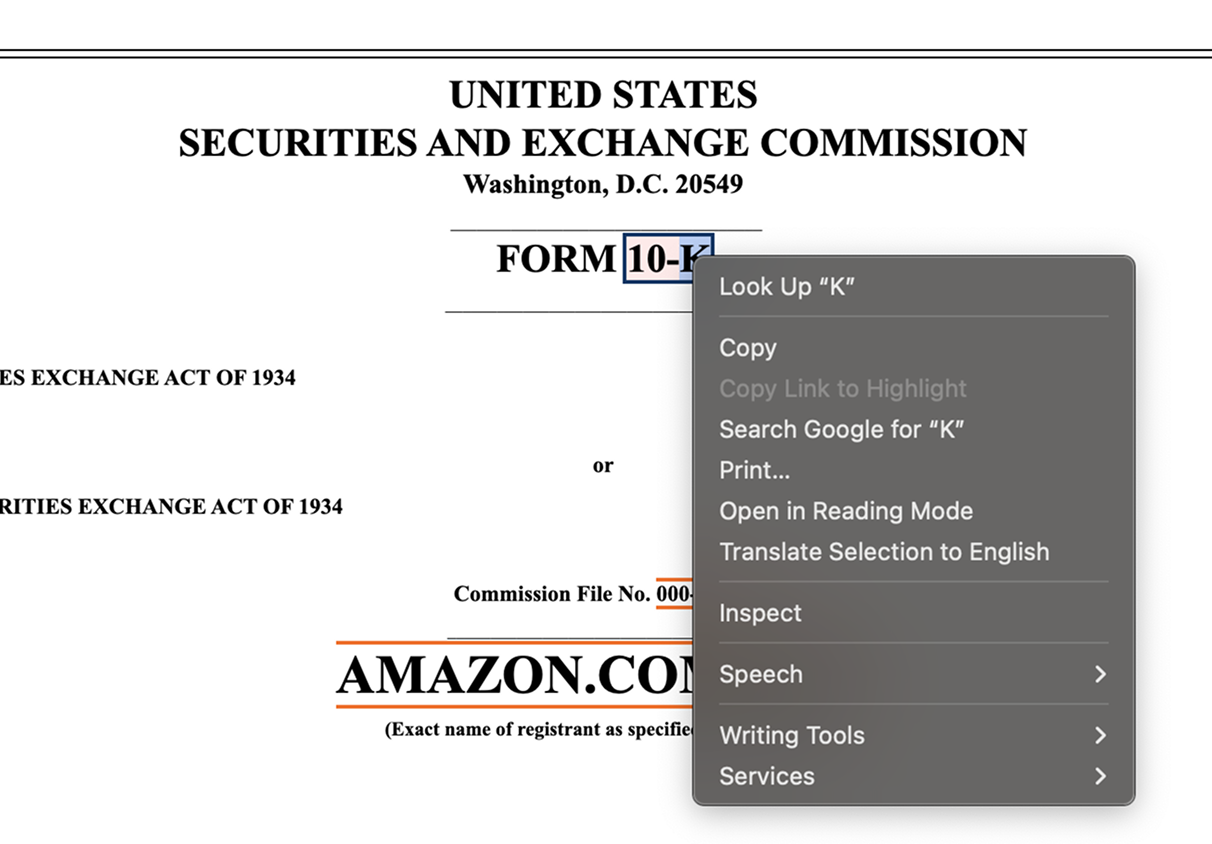
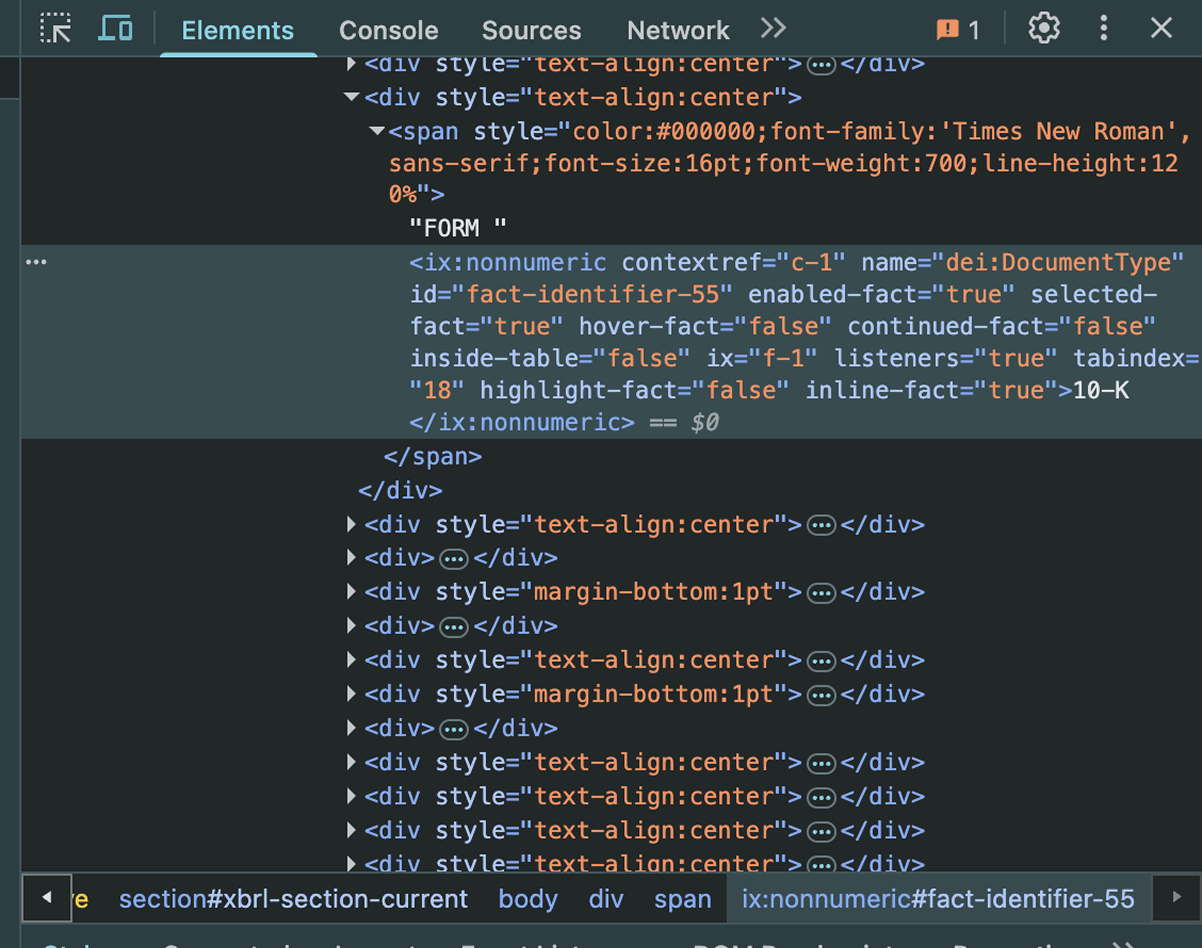
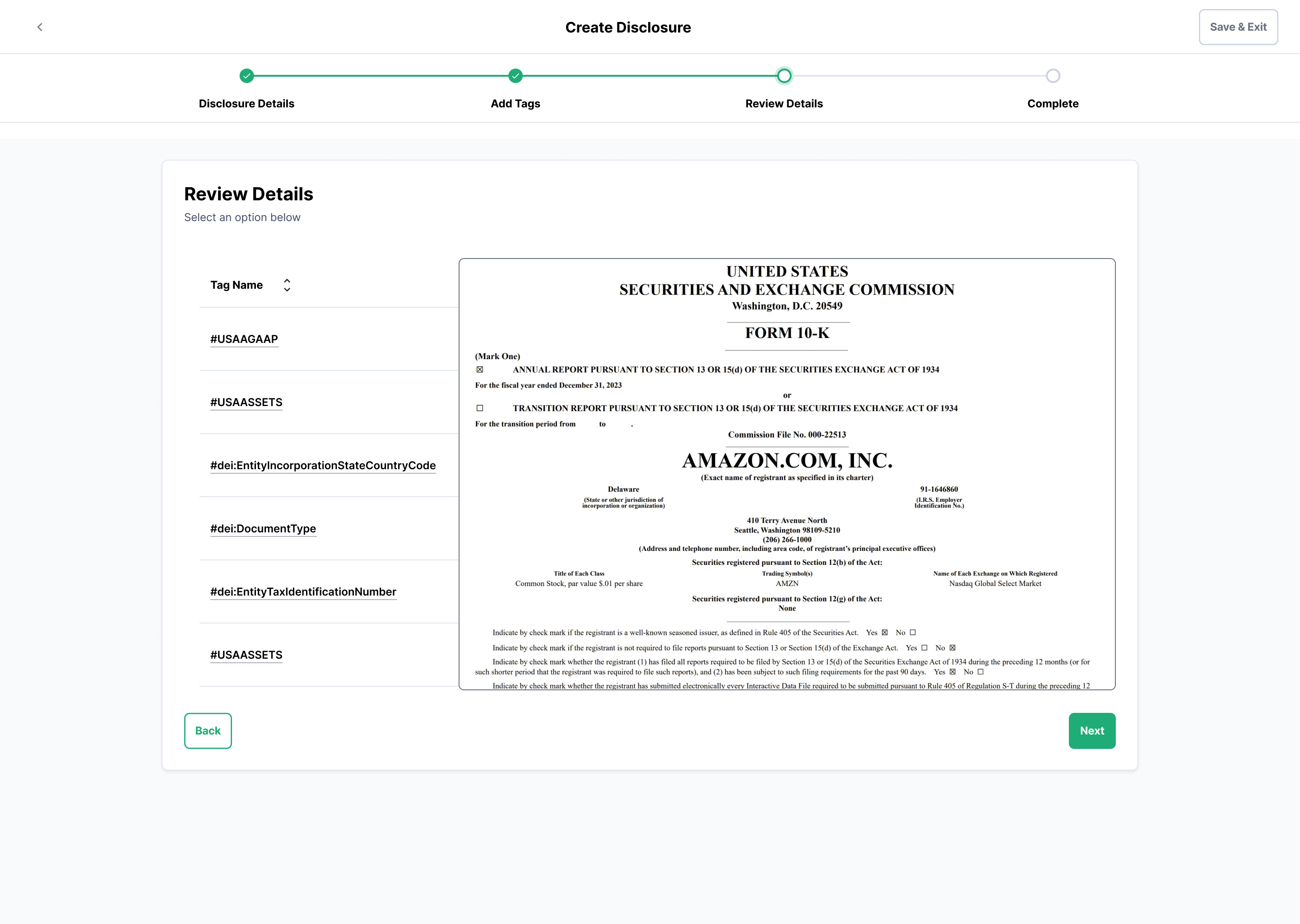
Left: Inspecting the SEC filing source — Right: XBRL tags embedded in the HTML markup
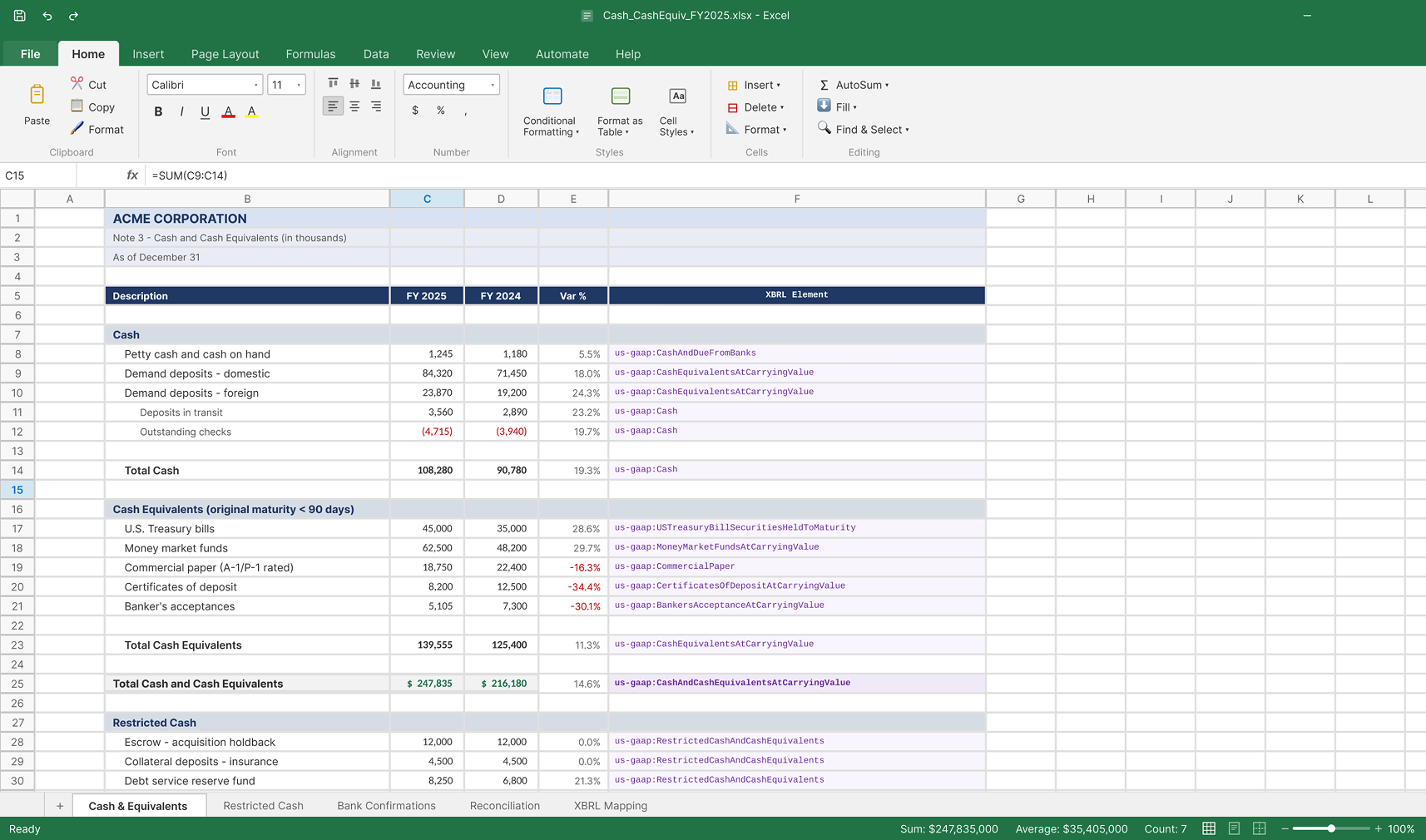
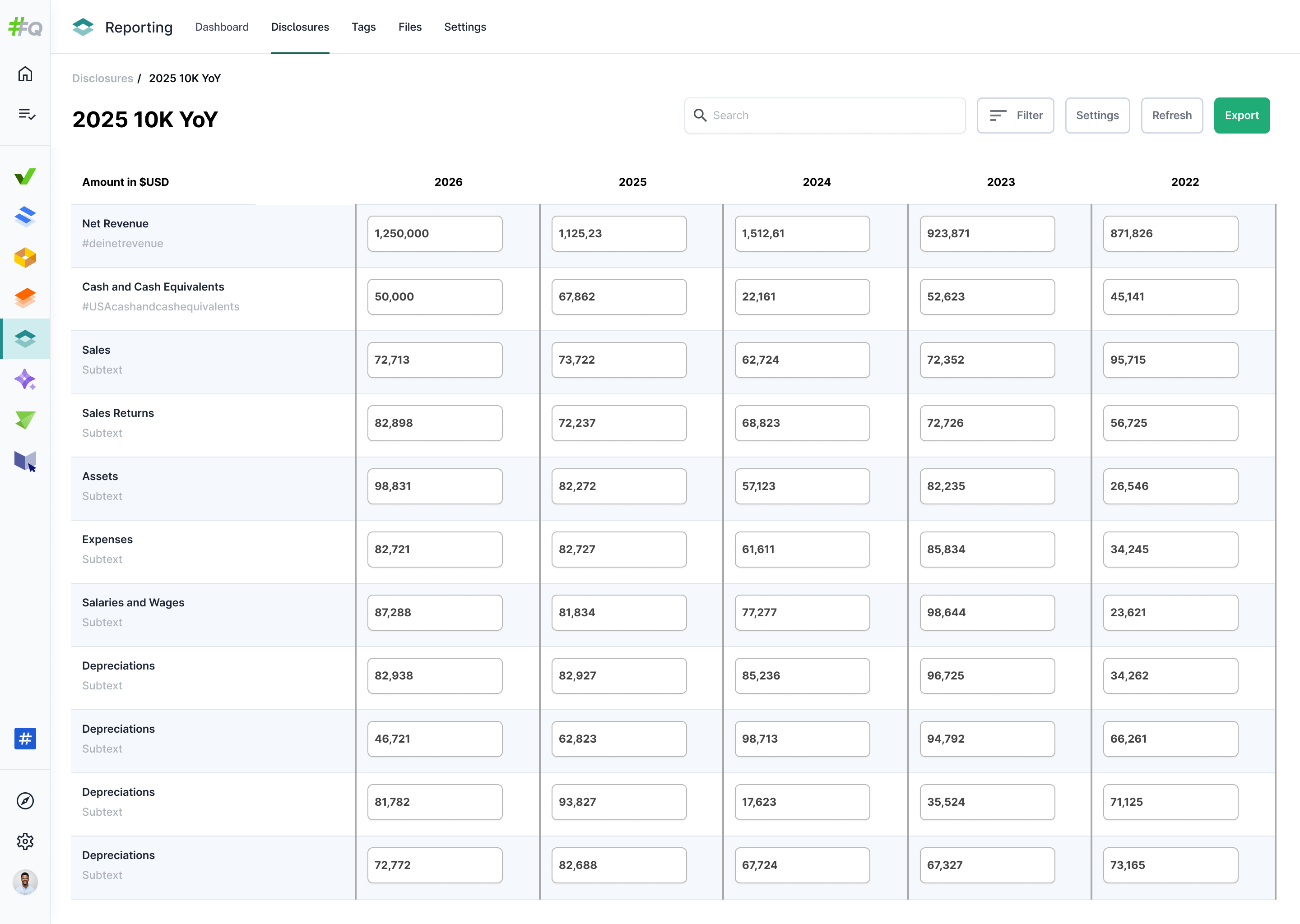
Left: Combining SEC filing data with Excel workbooks — Right: Auto-matching tags to financial line items
With the existing design system flexible enough to support the experience, I focused on six key areas for the final design: onboarding, fast tag import, tag preview, complete matching, document configuration, and export.
Guide users through setting up their first XBRL filing — connecting data sources, selecting filing type, and understanding the workflow.
Bulk import tags from previous SEC filings and Excel workbooks — turning a 150-hour manual process into minutes.
Review and validate imported tags before committing — ensuring accuracy and confidence before submission.
Leverage FloQast’s transaction matching to automatically map tags to line items — resolving mismatches and flagging items that need attention.
Configure document settings, review tagged content across all sections, and resolve any discrepancies before finalizing.
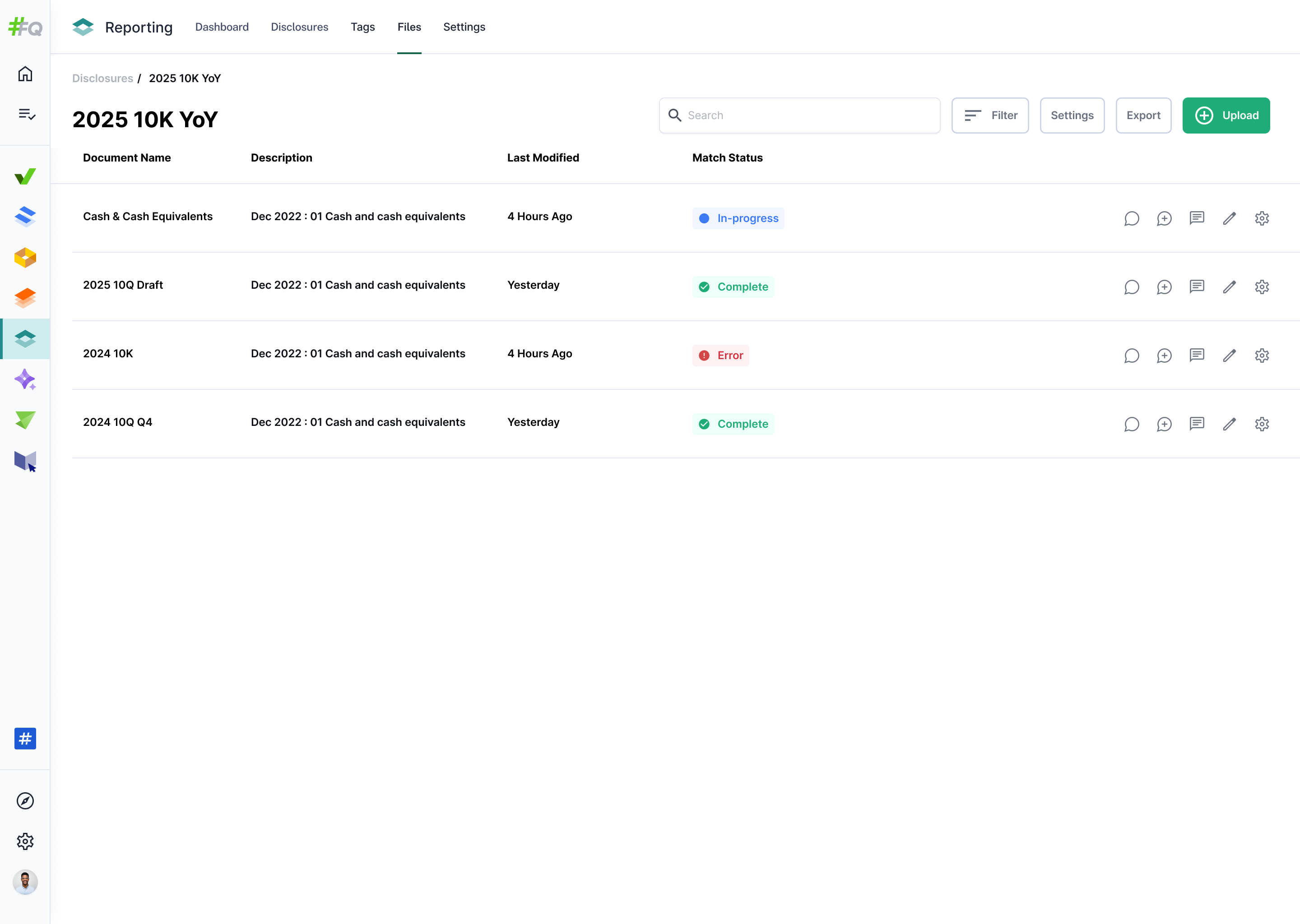
Generate and export the completed XBRL-tagged disclosure — ready for SEC submission with all tags validated.
Interactive prototype — click through the final design
Disclosure walkthrough — the complete flow from import to export
FloQast Reporting — the complete XBRL tagging and disclosure experience
We brought the updated prototype back to clients for validation testing, measured against key success metrics, and gathered direct feedback.
Ralph Lauren partnered with FloQast as the first alpha testers of the XBRL tagging product — signing a $300K annual deal on top of being an alpha partner, validating the solution with a Fortune 500 enterprise client.
The prototype directly contributed to closing this deal, demonstrating how design-driven thinking can translate into measurable business outcomes.
Measured how long users took to import tags and complete filing setup compared to the manual process.
Tracked whether users could successfully onboard, import, preview, and match tags without assistance.
Gathered qualitative feedback on confidence, clarity, and willingness to adopt the new workflow.
The prototype directly contributed to closing a $300K deal, validating the design’s value to sales and leadership.
What this project taught me about 0-to-1 product design.
The SEC EDGAR discovery came from personal investigation, not a product brief. Digging into the problem domain yourself — beyond what’s asked — can unlock solutions nobody expected.
Cutting AI features was painful, but the MVP still solved the core jobs. Shipping a focused product that works is better than a broad one that doesn’t ship.
The prototype directly closed a $300K deal with Ralph Lauren. When design is polished enough to demo to executives, it becomes a revenue driver, not just a support function.
Validated the technical approach with engineering, pitched it to PM, who sold it to leadership. Designers who can navigate the org get their ideas built.